
Now Pollution is an important problem not only in India, but the whole world is also fighting with it. It is also called environmental pollution. To define pollution we can say that pollution is an addition of any material, whether it is solid or liquid or gas or any type of energy like heat, sound, etc. to the environment. So National Pollution Control Day is observed on 2nd December each year to raise awareness among people about the effects & problems of pollution that they are facing every day. Also, it is observe in memory of those people, who had lost their lives in the Bhopal Gas tragedy on 2nd December 1984.
Therefore, many elements are responsible for causing pollution like bursting of crackers, vehicles running on the roads, bomb blasting, leakage of gases in industries, etc.
Objectives of National Pollution Control Day:
Therefore, one of the main objectives of celebrating this National Pollution Control Day is to spread awareness of managing & controlling industrial disasters. Because, Industries cause various pollutions like water, air, soil, and noise for which the environment & obviously health were more affected. For example, the Bhopal gas tragedy is the worst tragedy in the world where the leakage of poisonous gas “Methyl Isocyanate”(MIC) had taken many lives. This day is important to raise awareness in people about the pollution. so that, they can make a better & clean environment. Also, there are many pollution control acts made by the Government of India to fight against pollution. For example, Delhi Government decreases vehicles running on the road. So, one of the key factors of this day is to make people & industries conscious of the pollution control laws.
What Happened in Bhopal Gas Tragedy?
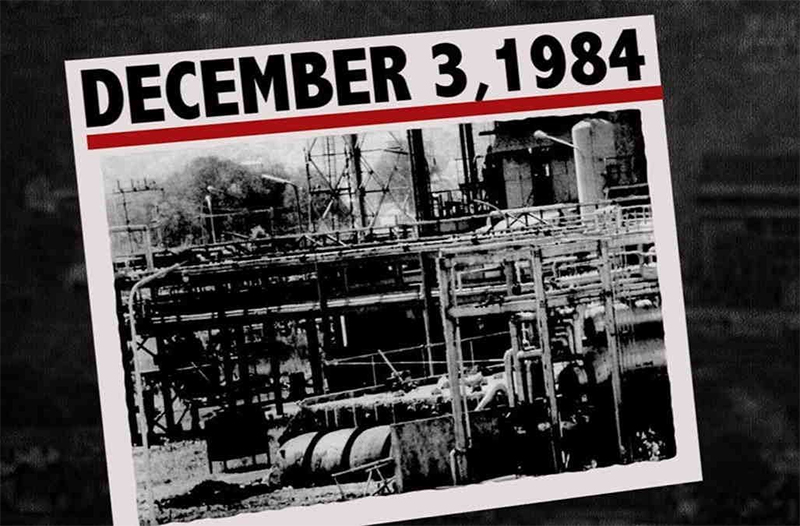
The dates of this accident are 2nd & 3rd December, 1984 when a poisonous chemical MIC (Methyl Isocyanate) & some other chemicals were released from a pesticide plant UCIL (Union Carbide India Limited) in Bhopal, MP. That time there were more than 5, 00,000 people were preset in an unsafe condition. Hence, around 2259 people died instantly & later MP Government declared that around 25,000 people died in that accident. So it was a biggest industrial disaster in the history of the whole World.
Other Tragedies:
Some other big tragedies in the history of the World are –
- In 1979, one of the big tragedies of history occurred at the American Nuclear Generating Station of the Three Miles Island in the Dauphin country, Pennsylvania(near the Harrisburg)
- Another big tragedy of the history was the Chernobyl disaster of the year 1986 in the Ukraine.
- Also, another disaster after the Bhopal Gas tragedy in India was the leakage of Oleum gas that occurred in the Shriram Food & Fertilizes Ltd complex in Delhi.
Preventive Methods Are Taken By The Indian Government:
- Water (Prevention and Control of Pollution) Act of 1974
- Water (Prevention and Control of Pollution) Cess Act of 1977
- Air (Prevention and Control of Pollution) Act of 1981
- Environment (Protection) Act of 1986
- Environment (Protection) Rules of 1986
- Manufacture, Storage and Import of Hazardous Chemical Rules of 1989
- Manufacture, Storage, Import, Export & Storage of Hazardous Micro- Organisms
- Genetically Engineered Organisms or Cells Rules of 1989
- Chemical Accidents (Emergency, Planning, Preparedness and Response) Rules of 1996
- Bio-Medical Waste (Management & Handling) Rules of 1998
- Recycled Plastics Manufacture and Usage Rules of 1999
- Ozone Depleting Substances (Regulation) Rules of 2000
- Noise Pollution (Regulation and Control) Rules of 2000
- Municipal Solid Waste (Management & Handling) Rules of 2000
- Batteries (Management and Handling) Rules of 2001
- Environment Impact Assessment Notification of 2006
- The National Green Tribunal Act, 2010
- Solid Waste Management Rules, 2016
- Hazardous and Other Wastes (Management and Transboundary Movement) Rules, 2016
- Bio-Medical Waste Management Rules, 2016
- Plastic Waste Management Rules, 2016
- E-Waste (Management) Rules, 2016
- Construction and Demolition Waste Management Rules, 2016
As the natural resources like air, water, land or forest are rapidly affected by different types of pollution. Because it is very important to implement the rules properly for protecting the environment & reducing pollution.
Various Ways To Reduce Pollution:
- By treating & managing solid waste
- By the solution of Biochemical waste, the reuse of waste pollution can reduced
- The treatment of the Electronic waste pollution can reduced
- Pollution in Urban areas can decrease by the Clean Development Mechanism Project.
Hence, it is very important to control the pollution & it is not only the Government duty. We should be also aware & try to make a clean, live, disease-free environment. Because in this environment people can do their task in a better way & can live their life happily.
National Pollution Control Board:
The function of all the laws & rules are checked by the National Pollution Control Board (NPCB) or Central Pollution Control Board (CPCB). These are the governing part in India for preventing pollution. Because, they always check if the industries are using environment friendly technologies in a right way. Also, Maharashtra has its own control board named Maharashtra Pollution Control Board (MPCB). As Maharashtra is a big state where the rate of industrialization is growing very quickly, so there were need pollution control board immediately.
What Are The Pollution Control Measures?
- Urban Waste water treatment and reuse project
- Scientific treatment of solid waste and its management
- Reduce generation of waste
- Sewage treatment facility
- Reuse of waste and producing energy from the waste.
- Biomedical waste treatment facility
- Electronic waste treatment facility
- Water supply projects
- Resources recovery project
- Energy saving projects
- Hazardous waste management in urbanized areas
- Projects on the Clean Development Mechanism
In addition to that, there are many other attempts taken by the state government as well by making the pollution controlling Policy, proper implementation of rules, and all the preventive measures of pollution. Therefore, Industries are the first who must follow all the rules and regulations launched by Authority to control and reduce the pollution.
